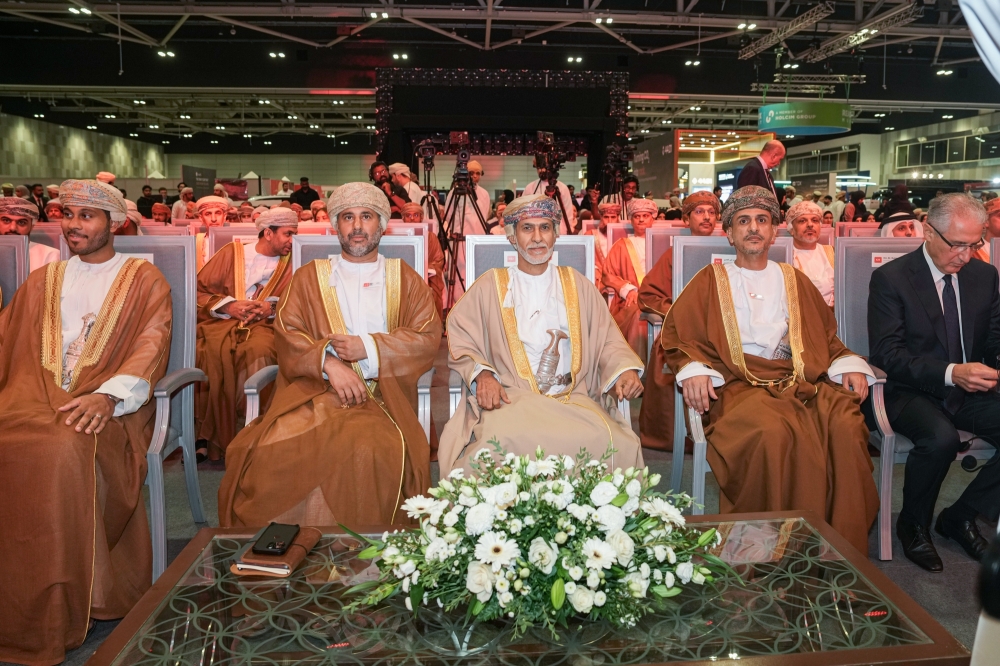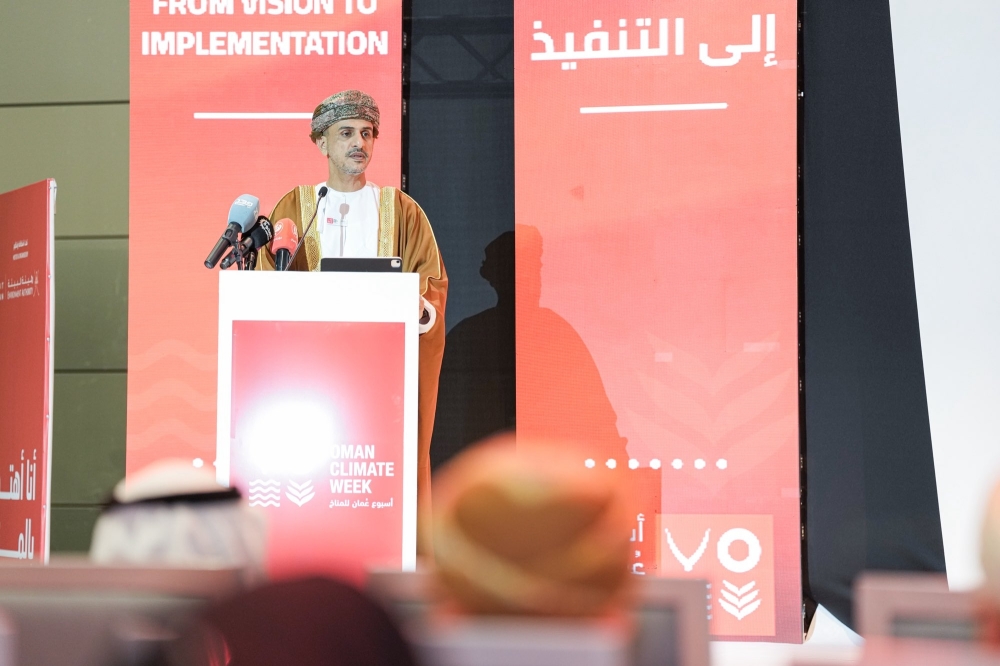





The second edition of Oman Climate Week 2026 was launched under the patronage of Sheikh al-Fadhl bin Mohammed Al-Harthi, Secretary-General of the Council of Ministers.
The Week also sees the launch of a collaborative program to establish the 'Environmental Innovation Center designed to support environmental ideas and projects while connecting innovators with funding and investment—as well as the launch of the Green Branch Award to encourage companies to enhance sustainability practices and support the enhance sustainability practices and support the transition to a green economy.
Dr. Abdullah Al-Amri, the Chairman of the Environment Authority (EA) in his speech said that environmental sustainability has become integral to decisions regarding energy, water, food, investment, and economic competitiveness. He noted that the Sultanate of Oman is advancing toward net-zero emissions by 2050 through an orderly and realistic transition.
The event sees the participation of over 50 countries, 400 speakers, and more than 5,000 attendees discussing solutions for climate, energy, the circular economy, finance, and innovation, while calling for a shift from ambition to implementation.
Al Amri siad, "The Sultanate of Oman is transforming climate opportunities into practical pathways through carbon projects, nature-based solutions, mangrove planting, investments in nature reserves and eco-tourism, and the development of waste management systems."
Mukhtar Babayev, the Representative of the President of the Republic of Azerbaijan for Climate Affairs, said that climate agreements and commitments only hold true value when they drive tangible change on the ground; the next phase requires moving from negotiating commitments to achieving results.
Chris Bowen, Australia’s Minister for Climate Change and Energy, affirmed that exceeding the 1.5°C threshold does not mean abandoning the climate goal; rather, it alters the path without changing the destination, noting that every fraction of a degree matters. He emphasized that the current phase requires faster emissions reductions, strengthened adaptation efforts, and expanded access to climate finance, alongside accelerating the implementation of commitments and translating them into tangible results.
Bowen noted that the transition to clean energy is accelerating as an economic reality, underscoring the importance of fast-tracking climate commitments and turning them into concrete outcomes.
Dr. Roberta Boscolo, Climate and Energy Lead at the World Meteorological Organization, confirmed that the latest climate data show a continued rise in global and ocean temperatures and sea levels, as well as the melting of glaciers.
Boscolo said, "Developing meteorological services, data, and early warning systems is crucial for supporting investment and planning decisions and protecting infrastructure. Climate action begins with a shared information base grounded in science and data reliability."
Oman Climate Features a high-level ministerial session titled "The Road to COP31," alongside sessions discussing renewable energy, green hydrogen, the circular economy, and climate finance. These events aim to foster collaboration and help translate climate-related goals into actionable policies and projects."
Oman Observer is now on the WhatsApp channel. Click here